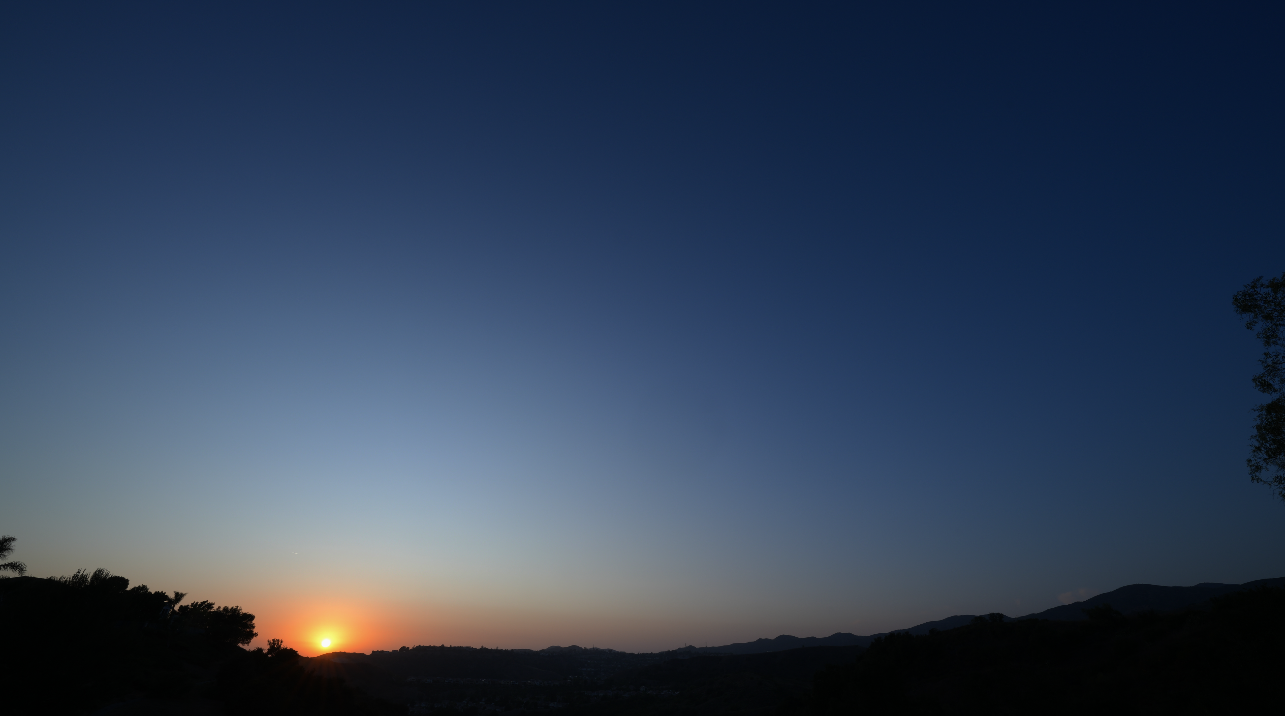
Everything below was typed up before I started shooting… there were problems with the power… and the shoot never went forward to completion. So… we will try this another day.
24 June 2025 — I set up the timelapse in the late afternoon about 5-ish with a clear view of the sun in the west. The village is below and the lights will come on around sunset. I’ll wait until the end of astronomical twilight at 9:48 PM to stop shooting, then compile everything into a timelapse and upload it to YouTube.

Sunset: 8:04 PM.
Twilight – Civil: 8:04 to 8:33 PM.
Twilight – Nautical: 8:33 to 9:09 PM.
Twilight – Astronomical: 9:09 to 9:48 PM.
See below for Elevation Angle in degrees for the sun at different times.
I chose a 10-second lapse between frames for this one, and will modify everything in post production.
Designations for Light Levels from Daylight to Dark:
1. Daylight:
This is the period when the sun is above the horizon, providing direct sunlight.
2. Twilight:
Twilight is the period when the sun is below the horizon but its rays still scatter light, illuminating the sky.
It occurs both before sunrise (dawn) and after sunset (dusk).
There are three main types of twilight, distinguished by the sun’s position below the horizon:
Civil Twilight: Sun is between 0° and 6° below the horizon. There’s enough light for most outdoor activities without artificial illumination.
Nautical Twilight: Sun is between 6° and 12° below the horizon. The horizon is still discernible at sea, and some stars are visible for navigation.
Astronomical Twilight: Sun is between 12° and 18° below the horizon. The sky is dark enough for most astronomical observations, and faint stars and planets are visible.
3. Night:
Night is the period when the sun is 18° or more below the horizon, and the sky is considered truly dark.